
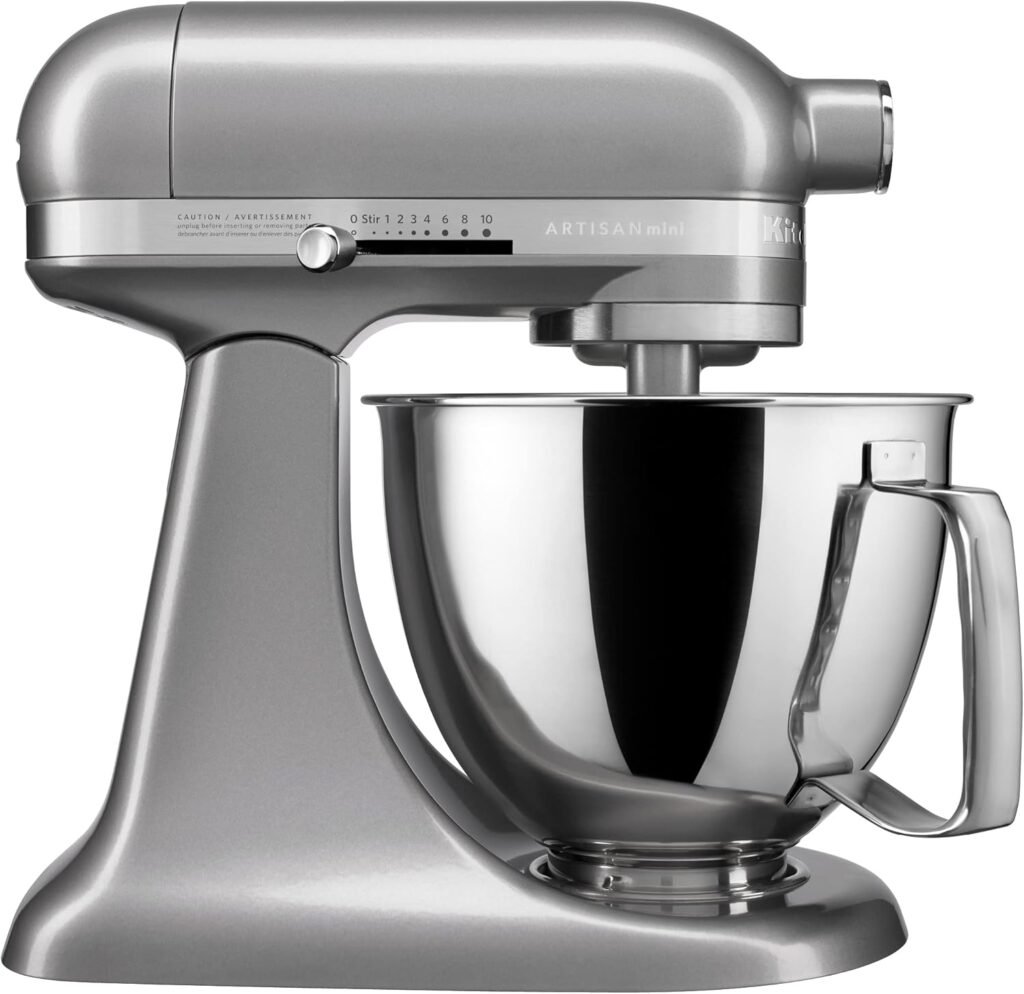
KitchenAid Artisan Mini KSM3316XCU Stand Mixer
A stand mixer can make baking far easier, but full-size models demand a permanent section of the countertop. They are also heavy enough that moving one in and out of a cabinet quickly becomes inconvenient. The KitchenAid Artisan Mini KSM3316XCU approaches that problem by placing familiar KitchenAid mixing functions inside a smaller 3.5-quart design.
This is not simply a lightweight hand mixer sitting on a stand. It has metal construction, ten speed settings, a tilt-head body, and dedicated attachments for mixing, whipping, and kneading. KitchenAid also states that it offers the same power as the KitchenAid Classic Stand Mixer while taking up less space and weighing less.
At the time of writing, the Contour Silver model has a 4.7 out of 5-star Amazon rating from 1,150 customer reviews. Buyer comments commonly praise its compact size, particularly for apartments, smaller kitchens, and recipes that do not require a large bowl.
Quick Verdict
The KitchenAid Artisan Mini is a strong choice for someone who wants a genuine stand mixer but normally prepares smaller batches. Its 3.5-quart bowl, ten speeds, flex edge beater, dough hook, and wire whip cover the main jobs expected from a stand mixer.
The main limitation is also clear: this is a Mini model. It is better suited to everyday cakes, cookies, whipped cream, mashed potatoes, batters, and moderate dough recipes than oversized or doubled batches. Buyers who regularly prepare large quantities may find the bowl restrictive.
Product Overview
| Specification | Details |
|---|---|
| Brand | KitchenAid |
| Model | KSM3316XCU Artisan Mini |
| Mixer Style | Tilt-head stand mixer |
| Bowl Capacity | 3.5 quarts |
| Power | 250 watts |
| Speed Settings | 10 speeds, including Stir |
| Construction | Metal body with stainless steel bowl |
| Dimensions | 12.3″D × 7.8″W × 12.3″H |
| Weight | 14.3 pounds |
| Included Accessories | Flex edge beater, coated dough hook and six-wire whip |
| Voltage | 120 volts |
| Warranty | One-year full warranty |
| Amazon Rating | 4.7 out of 5 stars from 1,150 reviews at the time of writing |
A Smaller Footprint Without a Lightweight Feel
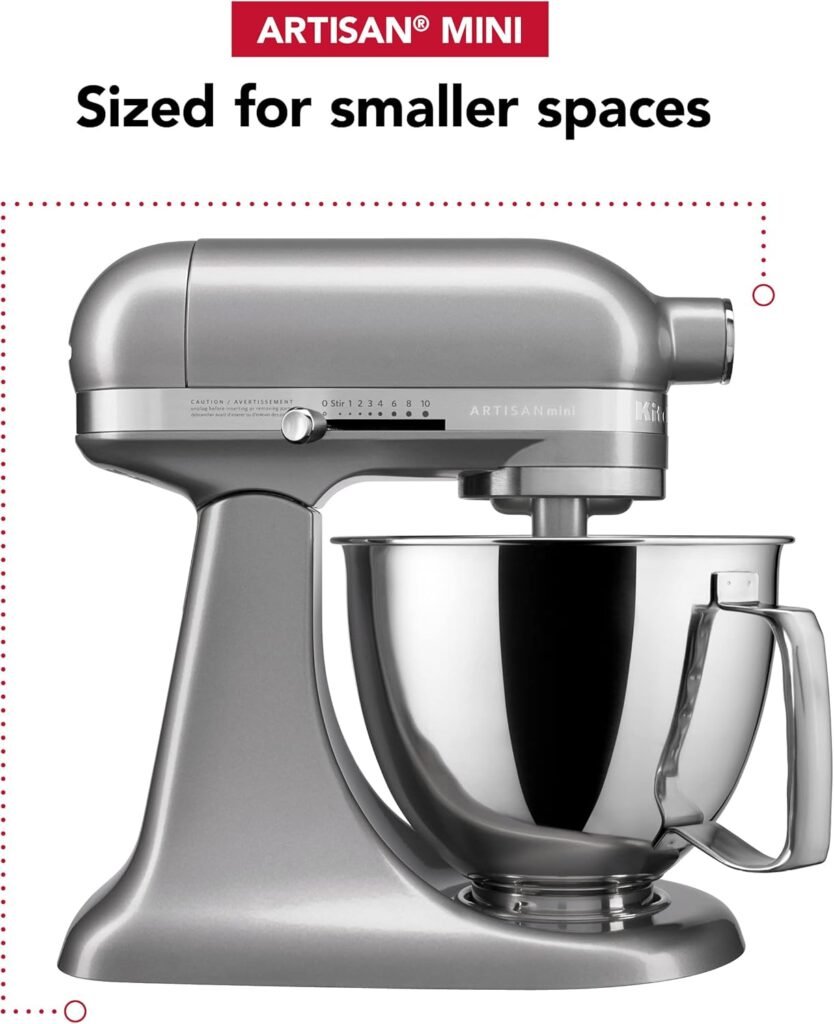
The Artisan Mini measures 12.3 inches deep, 7.8 inches wide, and 12.3 inches high. Its narrow width is particularly helpful on crowded counters. At 14.3 pounds, it is still substantial enough to feel like a proper stand mixer, but it is easier to move than larger KitchenAid models weighing more than 20 pounds.
Its Contour Silver finish gives it the recognizable KitchenAid appearance without making the appliance look oversized. The metal construction also separates it from many lightweight budget mixers that rely heavily on plastic bodies.
The 3.5-Quart Bowl Defines Its Purpose
The stainless steel bowl is designed for smaller recipes. KitchenAid states that it can prepare up to five dozen cookies in one batch, based on 28-gram portions using the flat-style beater. This gives the bowl useful capacity for regular home baking, although the result will depend on the recipe and dough consistency.
The bowl is dishwasher safe, which simplifies cleanup after sticky batter or dough. Its handle also makes it easier to remove, carry, and empty.
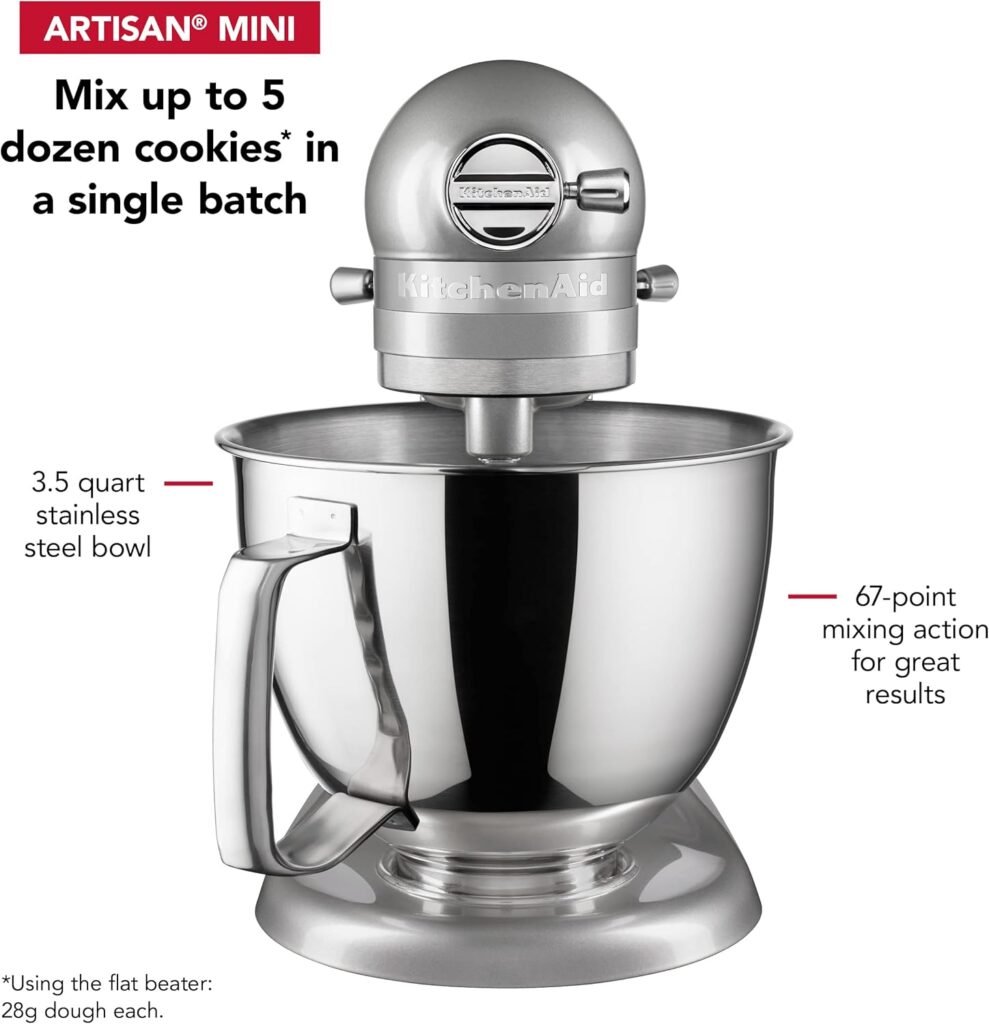
The smaller bowl can become limiting when doubling recipes. One customer specifically noted that it would not be suitable for a double batch of cookies. Anyone choosing between this model and a 5-quart KitchenAid should consider their usual batch size rather than countertop space alone.
Tilt-Head Access Makes Ingredient Changes Easier
The mixer head tilts upward to provide direct access to the bowl and attachment. This makes it easier to add ingredients, scrape the bowl, change accessories, or remove the finished mixture. The head locks in position during operation for more secure mixing.
This design is especially practical with a compact bowl because there is less space around the attachment than on a larger mixer. Raising the head creates the clearance needed to work comfortably.
Ten Speeds Cover Gentle Mixing and Fast Whipping
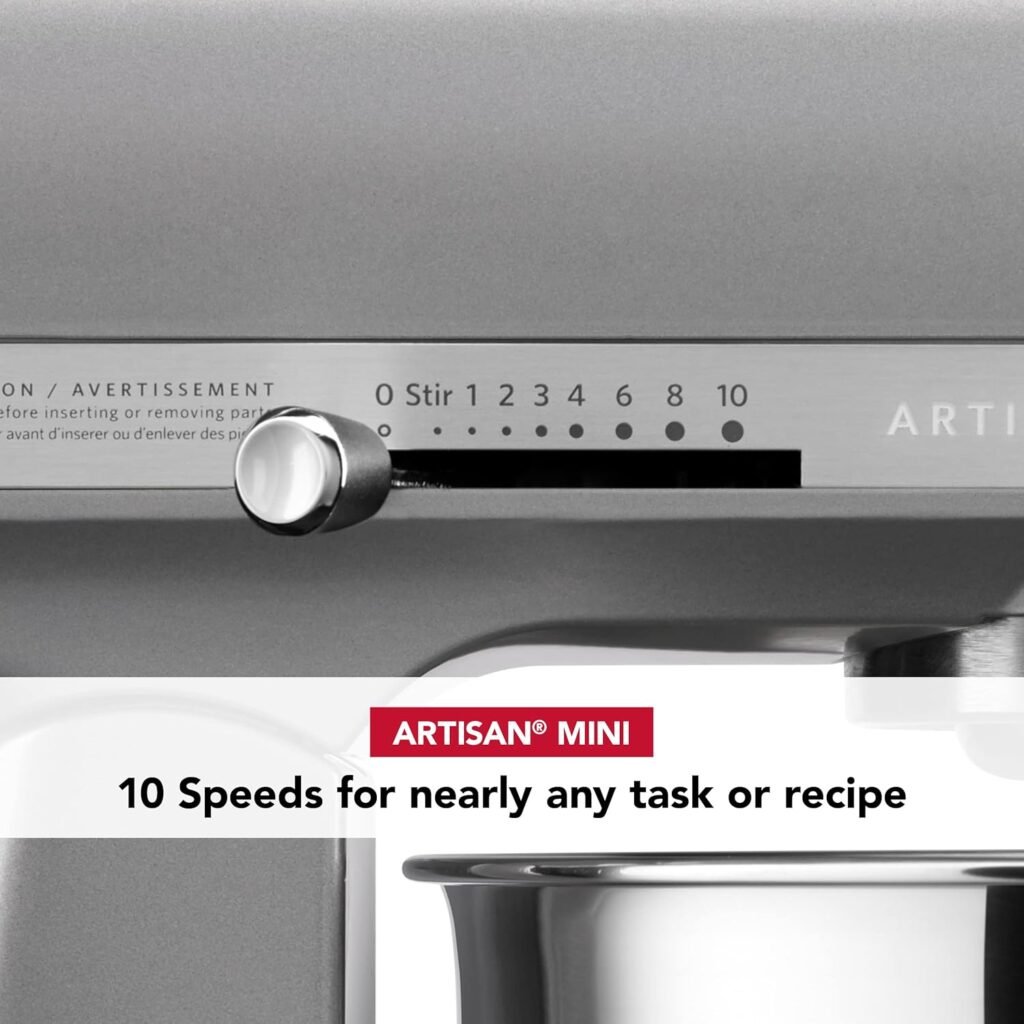
The speed control starts with Stir and moves through ten settings. Lower speeds are intended for gradually combining dry and wet ingredients, while higher settings can whip cream or aerate mixtures.
Starting slowly is important with this smaller bowl. One customer reported that a banana bread mixture splashed over the edge when the mixer was immediately turned to a high setting, while it worked properly at a lower speed. Beginning with Stir and increasing the speed gradually should help reduce flour clouds and liquid splashes.
What Comes in the Box
The confirmed model contents include:
→ One 3.5-quart stainless steel bowl
→ One flex edge beater
→ One coated dough hook
→ One six-wire whip
The flex edge beater mixes ingredients while its flexible side reaches closer to the bowl wall. The coated dough hook is intended for kneading suitable dough recipes, while the wire whip handles tasks such as whipped cream and aerated mixtures.
A customer outside the United States reported missing accessories, so checking the package contents immediately after delivery would be sensible.
Optional Attachments Extend Its Use
The Artisan Mini includes a front attachment hub that works with more than ten optional hub-powered KitchenAid attachments. These accessories are sold separately and can add functions such as pasta preparation or other food-processing jobs, depending on the attachment selected.
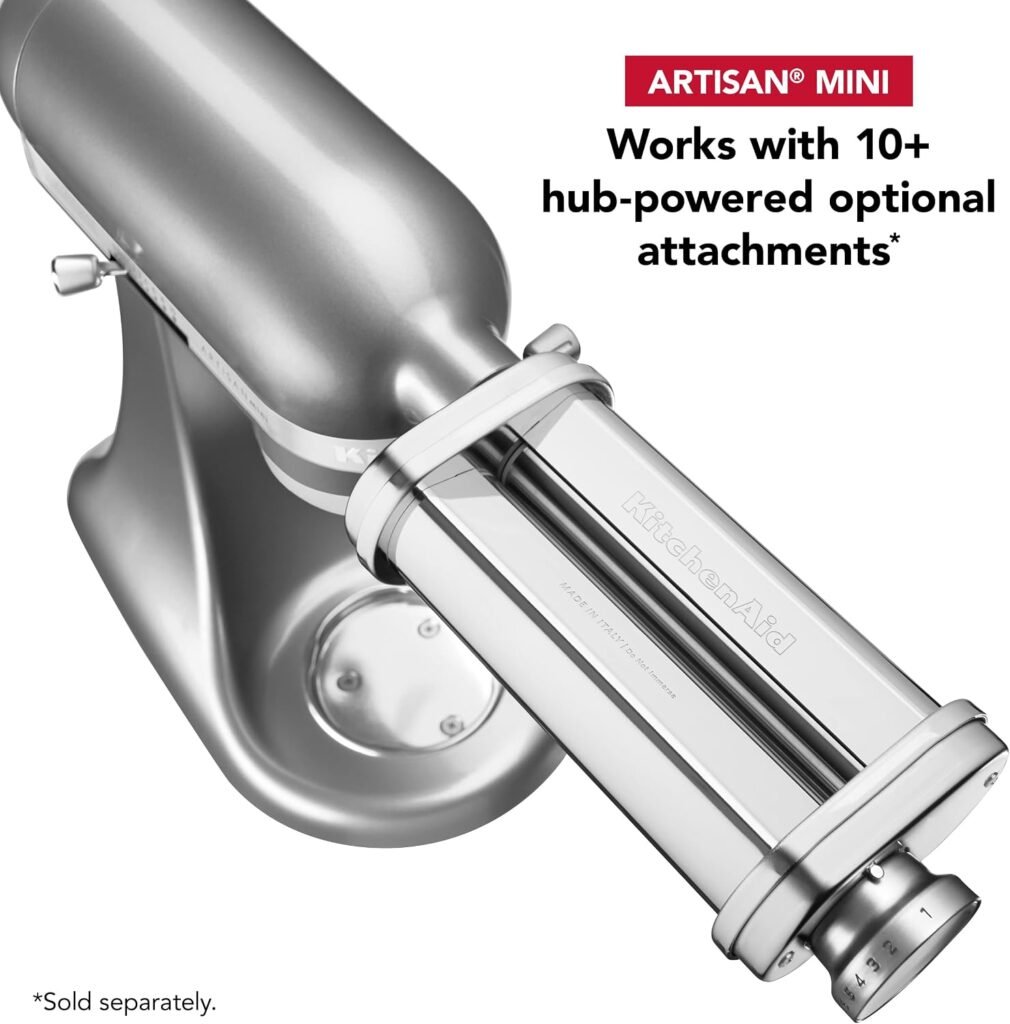
This compatibility gives the Mini more long-term flexibility than a basic stand mixer, although optional attachments increase the total cost and require additional storage.
Early Buyer Cautions
The 3.5-quart bowl should be treated as a small-batch bowl rather than a compact replacement for every full-size mixer. Customer feedback indicates that it works well for cookie batter, whipped cream, potatoes, banana bread, and recipes using a few cups of flour. Thick dough and larger mixtures may place greater strain on the machine.
One customer noticed mild wobbling while mixing cookie dough, though they did not consider it significant. The mixer should be used on a level, stable counter, and the head should be locked before mixing.
There is also a conflict in the supplied product information. The written description mentions 59 mixing touchpoints, while one promotional image states a 67-point mixing action. Buyers should not base their decision on that exact number. The more useful considerations are bowl capacity, ten-speed control, included attachments, and whether their usual recipes fit the Mini’s smaller format.
Everyday Mixing Is Where the Mini Makes the Most Sense
The KitchenAid Artisan Mini is designed for the recipes people prepare regularly rather than oversized baking projects. Customer comments mention successful results with cookie batter, banana bread, whipped cream, mashed potatoes, and mixtures made with two to three cups of flour.
Its 250-watt motor may appear modest when compared with mixers that advertise much higher numbers, but wattage alone does not explain how a stand mixer performs. KitchenAid states that the Artisan Mini provides the same power as its Classic Stand Mixer. The Mini also uses multiple contact points around the bowl to move the attachment through the ingredients instead of simply spinning in one position.
For cake batter, frosting, cookie dough, and similar recipes, the mixer should provide enough control without requiring a large bowl or a permanent countertop location.
Ten Speeds Offer More Control Than the Size Suggests
The Artisan Mini uses a mechanical lever with settings that begin at Stir and continue through ten speeds. This range allows the machine to move from gently combining flour to whipping cream at a much faster setting.
Stir is the safest starting point when adding dry ingredients because it reduces the chance of flour escaping from the bowl. Lower and medium settings are more appropriate for batter, mashed potatoes, and general mixing. Higher speeds are intended for whipping and adding air to lighter mixtures.
The compact bowl makes gradual speed changes particularly important. Turning the mixer directly to a high setting can cause liquids or loose ingredients to rise over the edge. One customer experienced this with banana bread mixture but found that the recipe mixed properly after returning to a lower speed.
The speed lever is simple, but users moving from a mixer with a rotating bowl may need a short adjustment period. In the Artisan Mini, the bowl remains fixed while the attachment moves through the mixture.
The Flex Edge Beater Handles the Most Common Jobs
The flex edge beater is likely to become the most frequently used attachment. It is suitable for cookie dough, cake batter, frosting, mashed potatoes, and other recipes that require ingredients to be combined thoroughly.
A flexible side runs closer to the wall of the bowl and helps pull ingredients back toward the center. This can reduce how often the machine needs to be stopped for manual scraping, although some recipes may still leave ingredients on the bottom or upper sides of the bowl.
The smaller bowl allows the beater to stay in closer contact with moderate quantities. Very tiny amounts may still require occasional scraping, while an overloaded bowl could prevent ingredients from moving freely. Keeping recipes within the intended capacity should produce a more consistent result.
Whipping Is a Natural Strength
The six-wire whip is designed for whipped cream, egg whites, and other mixtures that need air incorporated into them. The higher speed settings allow the whip to work quickly, while the bowl’s smaller diameter can help keep moderate quantities close to the wires.
Starting at a medium speed and increasing gradually gives more control than immediately selecting the highest setting. This also reduces splashing when working with cream or other liquids.
The stainless steel bowl has enough depth for regular whipping tasks, but users should still watch the mixture because the difference between soft and stiff peaks can happen quickly at higher speeds.
Dough Shows the Limits of the Smaller Format
The coated dough hook allows the Artisan Mini to knead dough, but bowl capacity and recipe size remain important. Customer feedback indicates that the mixer can handle recipes using a few cups of flour, particularly when the dough is not excessively dense.
The Mini is less suitable for large bread batches or repeated heavy kneading. One customer reported that cookie dough caused a small amount of wobbling, although the movement was not considered severe. Dense dough can place more resistance against the attachment than cake batter or whipped cream.
For dough recipes, ingredients should be added gradually and the mixer should remain on an appropriate lower speed. The machine should also be watched during kneading rather than left running unattended. If the head or body begins moving noticeably, stopping and reducing the batch size would be sensible.
The Bowl Works Best When Expectations Stay Realistic
KitchenAid’s claim of up to five dozen cookies sounds generous for a 3.5-quart bowl, but it is based on small 28-gram cookies and a specific test method. Actual capacity will vary according to the recipe, ingredient volume, and dough thickness.
A standard cake, a regular batch of cookies, or banana bread should fit its intended use more naturally than a doubled recipe. Buyers who frequently double recipes may spend more time dividing ingredients into separate batches, which removes some of the convenience of owning a stand mixer.
The smaller bowl is an advantage when working with moderate quantities because ingredients are not spread across the bottom of a much larger container. Its handle also makes it easier to lift and pour the finished mixture.
Lighter Weight Changes the Ownership Experience
At 14.3 pounds, the Artisan Mini is not extremely light, but it is more manageable than many larger stand mixers. This matters for anyone who does not want to leave an appliance permanently on the counter.
It can be moved from a cabinet or pantry without handling the weight of a full-size bowl-lift mixer. Its 7.8-inch width also uses less counter space, while the 12.3-inch height should fit beneath many kitchen cabinets when the head is lowered.
The trade-off is that a lighter body may be more likely to shift when handling a thick mixture. It should always sit on a clean, level, dry surface with enough space around it.
Cleaning Is Relatively Straightforward
The stainless steel bowl is dishwasher safe, while the finish and motor housing should be wiped with a damp cloth. Cleaning the bowl soon after use prevents batter and dough from drying around its base or rim.
The coated dough hook and flex edge beater should be cleaned according to the care guidance supplied with the mixer. The wire whip deserves particular attention around the points where the wires meet the hub, as soft mixtures can collect in those areas.
Before cleaning or changing an attachment, the mixer should be switched off and unplugged. The tilt-head design makes attachment removal easier because it creates more working space above the bowl.
Compact Does Not Mean Limited to One Purpose
The Artisan Mini can move from slow stirring to whipping, creaming, and moderate dough kneading without occupying the space of a large mixer. Its three included attachments cover the central functions most households need.
Its best performance will come from recipes that match the 3.5-quart bowl. Buyers who understand that boundary are more likely to appreciate the Mini’s convenient size. Those expecting frequent double batches or heavy bread production may find that a larger KitchenAid provides a more practical long-term fit.
What Buyers Notice After Living With the Mini
The strongest theme in the supplied customer reviews is that the KitchenAid Artisan Mini succeeds when its smaller size matches the buyer’s baking habits. Owners with compact kitchens, apartments, or limited storage space frequently appreciate that it offers stand mixer functions without the weight and footprint of a full-size model.
Several buyers describe it as a good fit for smaller households and ordinary recipes. Reported uses include cookie batter, whipped cream, mashed potatoes, banana bread, and mixtures containing a few cups of flour. Its size also makes it easier to move instead of leaving it permanently on the counter.
The more cautious feedback comes from buyers who previously owned or expected the performance of a larger stand mixer. The smaller bowl limits double batches, and dense mixtures may cause some movement. This does not necessarily make the Mini underpowered, but it does mean that capacity expectations matter more than the number of speed settings.
Customer Feedback Snapshot
Customer feedback data below is based on Amazon review information available at the time of writing, so the numbers may change over time.
| Feedback Area | What Buyers Appreciated | Caution Mentioned |
|---|---|---|
| Size | Buyers found it convenient for apartments, smaller kitchens, and limited counters. | The compact bowl cannot accommodate every doubled recipe. |
| Everyday Performance | Customer comments describe successful mixing of cookies, cream, potatoes, and regular batters. | A buyer comparing it with a full-size mixer was less satisfied with its performance. |
| Handling | Its lower weight makes it easier to move and store than many larger stand mixers. | At 14.3 pounds, it still requires careful lifting and stable storage. |
| Bowl Capacity | The 3.5-quart bowl works well for smaller households and moderate recipes. | One customer noted that it was not suitable for a double cookie batch. |
| Stability | Normal mixtures were handled without a major stability complaint in the supplied reviews. | Mild wobbling was reported while mixing cookie dough. |
| Package Contents | The listed package includes three attachments covering mixing, whipping, and kneading. | One international buyer reported receiving a package with missing parts. |
Detailed topic-by-topic positive and negative mention counts were not supplied for this product. The table therefore summarizes only the customer comments provided with the listing and does not assign unsupported percentages.
The Main Strengths and Compromises
| Main Strengths | Important Compromises |
|---|---|
| Its compact dimensions make it easier to fit into smaller kitchens. | The 3.5-quart bowl provides less room for large and doubled recipes. |
| The 14.3-pound body is easier to move than many full-size stand mixers. | Its lighter body may move slightly when processing a thick mixture. |
| Ten speeds cover slow stirring, general mixing, and fast whipping. | High speeds can cause ingredients to splash from the smaller bowl. |
| The flex edge beater, dough hook, and wire whip cover the main mixing tasks. | A separate standard flat beater is not listed among the confirmed contents. |
| Its metal construction gives it a more substantial feel than many compact mixers. | Its smaller size does not guarantee a lower price than discounted full-size models. |
The Mini’s biggest advantage is not that it performs every task a large mixer can handle. Its advantage is that it provides the familiar KitchenAid format in a size that is easier to store and move. For the right household, that convenience may result in the mixer being used more frequently.
Its biggest compromise is recipe flexibility. A larger bowl allows more room for double batches, bread dough, and mixtures that expand during mixing. The 3.5-quart bowl requires greater attention to ingredient volume and starting speed.
Who Is This Mixer Really For?
| A Good Choice For | Consider a Larger Mixer If |
|---|---|
| You normally prepare single batches of cakes, cookies, frosting, or whipped cream. | You frequently double recipes or bake for large gatherings. |
| You have limited countertop or cabinet space. | You have enough permanent space for a 4.5, 5, or 7-quart mixer. |
| You want a stand mixer that is easier to move after use. | You prefer leaving a heavier mixer permanently on the counter. |
| You occasionally knead moderate dough recipes. | You regularly prepare dense bread or pizza dough in large quantities. |
Someone who bakes regular cakes, cookies, frosting, banana bread, or other moderate recipes is more likely to appreciate this machine than someone preparing several loaves of bread at once. It is also a logical option for a buyer who wants a KitchenAid but has avoided larger models because of their weight.
Does the Value Match the Smaller Size?
The Artisan Mini should not be judged only by bowl capacity. Its value also includes metal construction, ten speeds, a stainless steel bowl, three useful attachments, a tilt-head mechanism, and compatibility with more than ten optional hub-powered accessories.
However, smaller does not automatically mean less expensive. Buyers should compare the current price with larger KitchenAid models before ordering. If a 4.5 or 5-quart model is available at a similar price and storage space is not a concern, the larger bowl may provide better long-term flexibility.
The Mini offers stronger value when compact dimensions and easier handling are priorities. It is less convincing when the only reason for choosing it is an expectation of a lower price.
Frequently Asked Questions
Can the KitchenAid Artisan Mini knead bread dough?
Yes. It includes a coated dough hook and can knead appropriately sized dough recipes. The 3.5-quart bowl is better suited to moderate quantities than large or repeated bread batches.
How many cookies can it make in one batch?
KitchenAid states that the bowl can mix up to five dozen cookies based on 28-gram portions using the flat-style beater. Actual capacity will depend on the recipe and dough thickness.
Is a separate flat beater included?
The confirmed KSM3316X package lists a flex edge beater, coated dough hook, and six-wire whip. It does not list a separate standard flat beater. The flex edge beater performs the main batter and cookie-dough mixing role.
Is the stainless steel bowl dishwasher safe?
Yes. KitchenAid identifies the 3.5-quart stainless steel bowl as dishwasher safe.
Does the mixer move while kneading or mixing thick dough?
One supplied customer review mentions mild wobbling while preparing cookie dough. The mixer should be placed on a level, dry surface and watched when handling thick mixtures.
Is the Artisan Mini as powerful as a full-size KitchenAid?
KitchenAid states that the Artisan Mini has the same power as the KitchenAid Classic Stand Mixer. Its smaller bowl still limits how much food or dough can be processed at one time.
Can optional KitchenAid attachments be used with it?
Yes. The front hub supports more than ten optional hub-powered attachments. These accessories are sold separately, and compatibility should be checked for the specific attachment before purchase.
Is the KitchenAid Artisan Mini suitable for double batches?
It depends on the recipe, but the 3.5-quart bowl is generally intended for smaller batches. Customer feedback specifically warns that some double cookie batches will not fit comfortably.
Final Verdict
At the time of writing, the KitchenAid Artisan Mini KSM3316XCU holds a 4.7 out of 5-star Amazon rating from 1,150 customer reviews. That strong rating fits the overall tone of the supplied feedback, where compact dimensions, easier handling, and dependable everyday mixing receive the most praise.
This mixer is most convincing as a space-saving KitchenAid, not as a miniature replacement for every full-size model. It provides ten speeds, useful attachments, metal construction, and a manageable 14.3-pound body, but its 3.5-quart bowl requires realistic batch sizes.
For smaller households, apartments, and regular baking recipes, the Artisan Mini offers a thoughtful balance of capability and convenience. Buyers who frequently double recipes, prepare large amounts of bread dough, or already have room for a full-size mixer will probably benefit more from a larger KitchenAid.